I walk the dogs early in the morning and, in the valley that means fog. I liked how the fog seemed to capture the light from this streetlamp in a bubble.
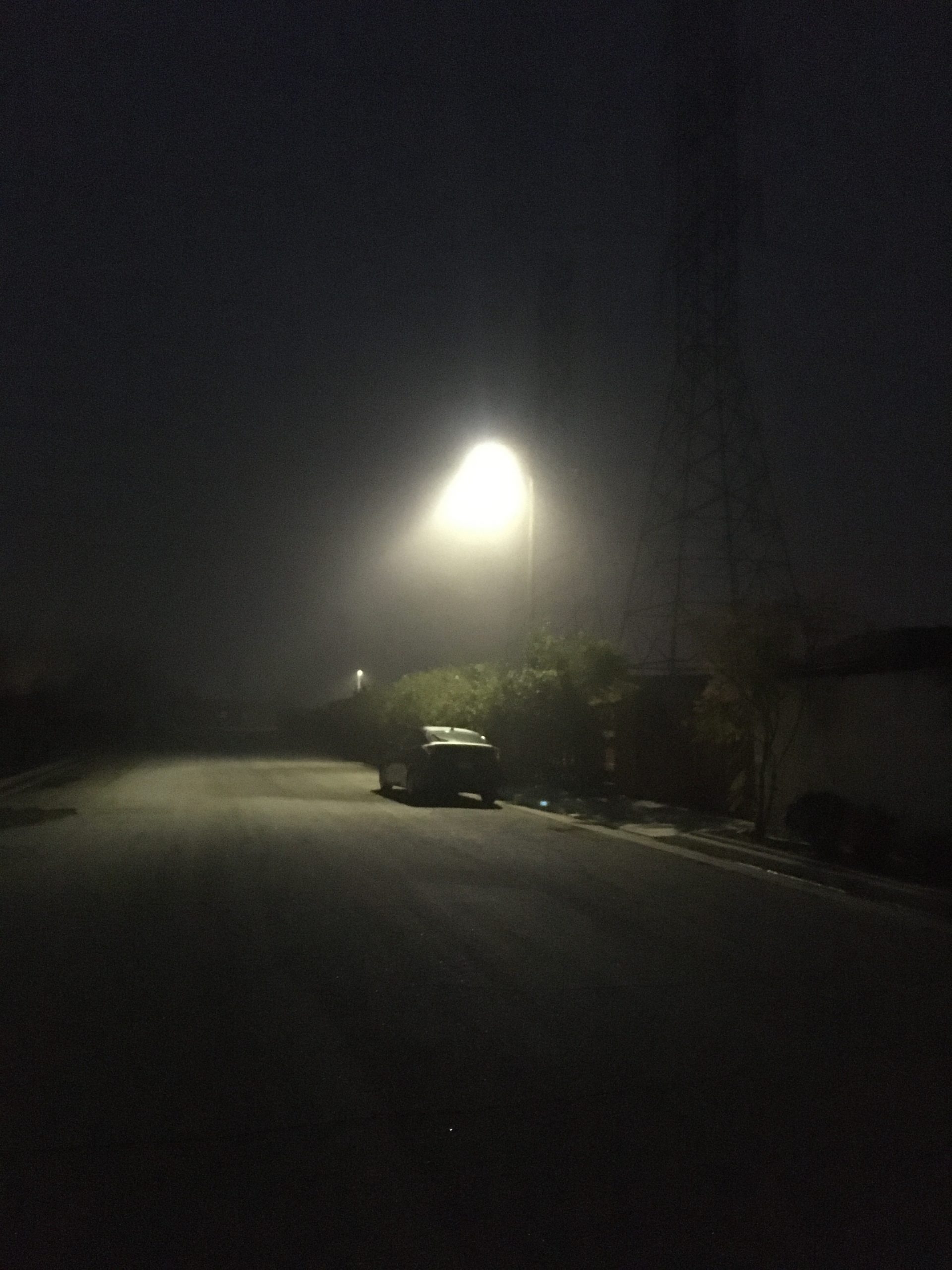

I walk the dogs early in the morning and, in the valley that means fog. I liked how the fog seemed to capture the light from this streetlamp in a bubble.
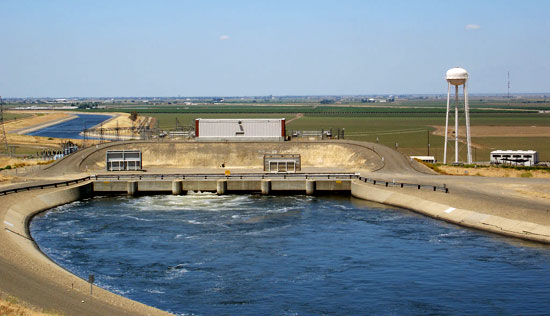
This is the California Aqueduct near Patterson from the lookout roadstop along Interstate 5. I was coming back from a deposition in San Francisco (ugh, don’t ask) in May 2019 and the sky was amazing just after a storm. Then I turned around and saw the aqueduct, which brings water from the Sacramento-San Joaquin Delta to farms and cities supplying 25 million people and snapped this shot, which makes it seem so insignificant, just a little concrete creek threading through the golden landscape.
I don’t have a fancy camera so if I get a good photo with my iphone, I’m excited by it. I like to think this was a nice photo. It’s a butterfly on my old lilac bush in March, 2019.

I love infrastructure. Canals, bridges, farm equipment. It’s fascinating what we humans have created.
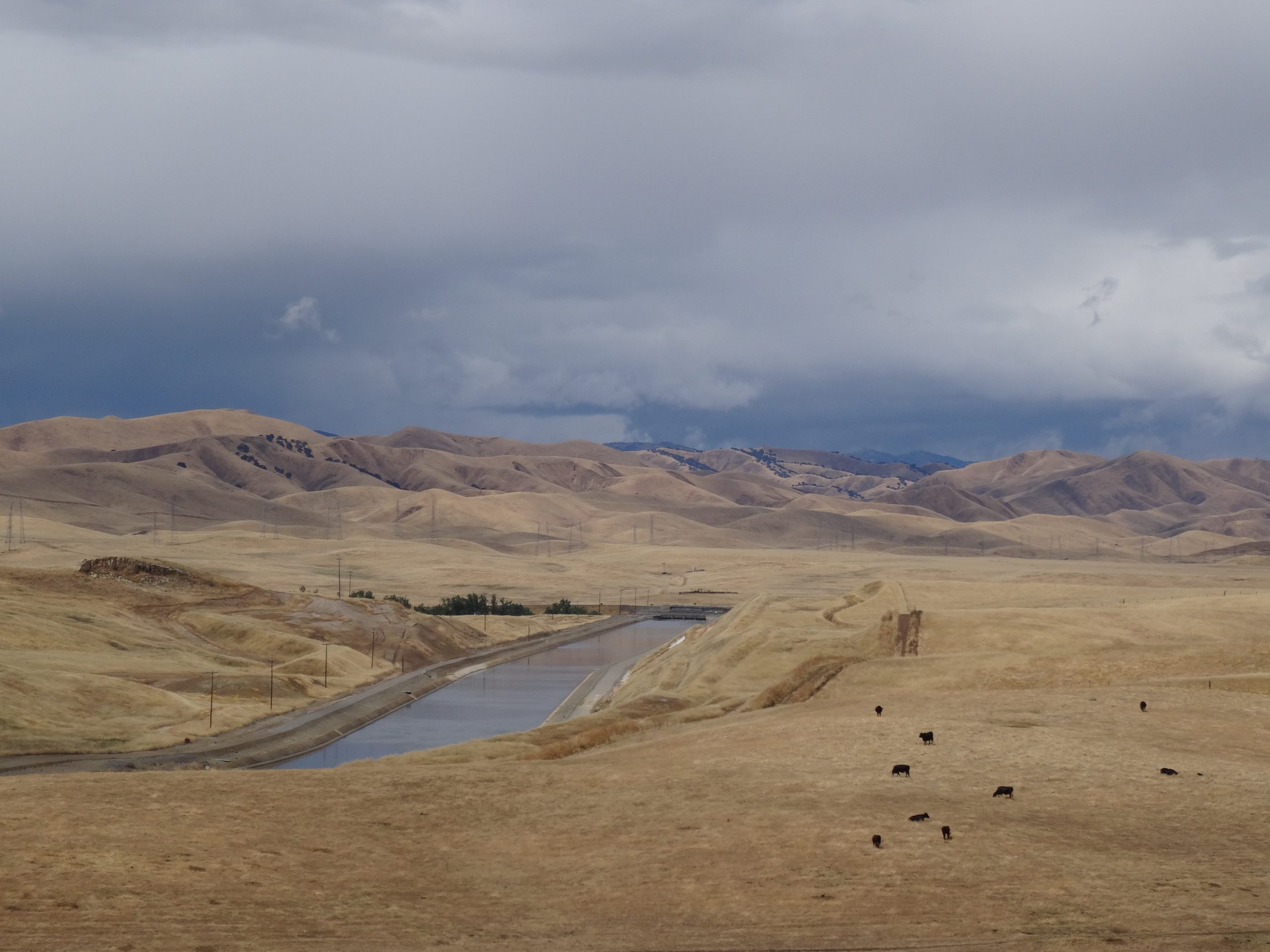
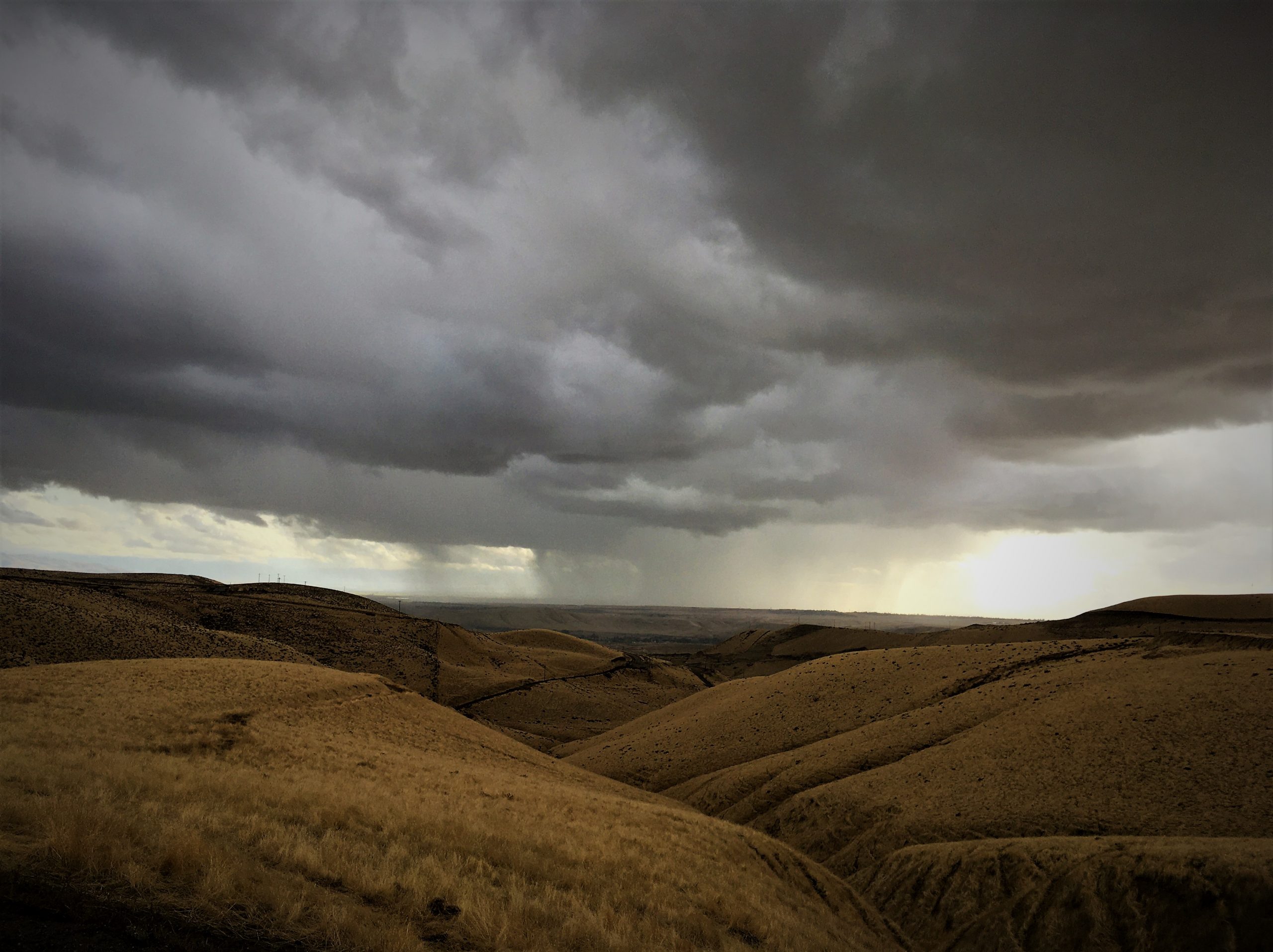
When it rains in Bakersfield, it’s rare enough that, if I have time, I get in the car and look at it from as many angles as I can. I got this at the top of Round Mountain Road on the east side of the county looking west. I was supremely honored that the wonderful artist David Gordon liked it so much, he painted a rendition of it that then sold! I almost didn’t take the picture except my husband thought it was a good view. Don’t tell him I said that!
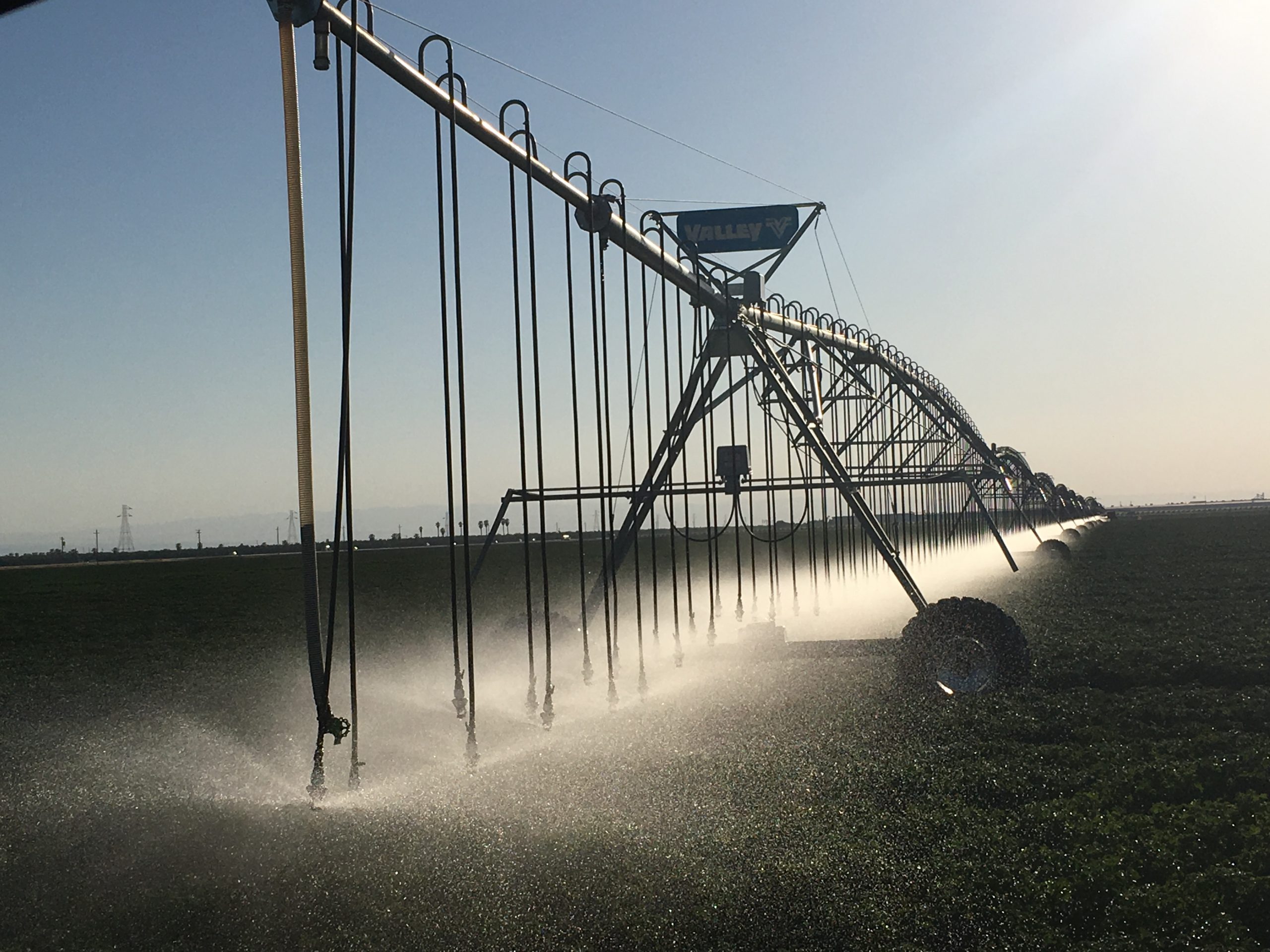
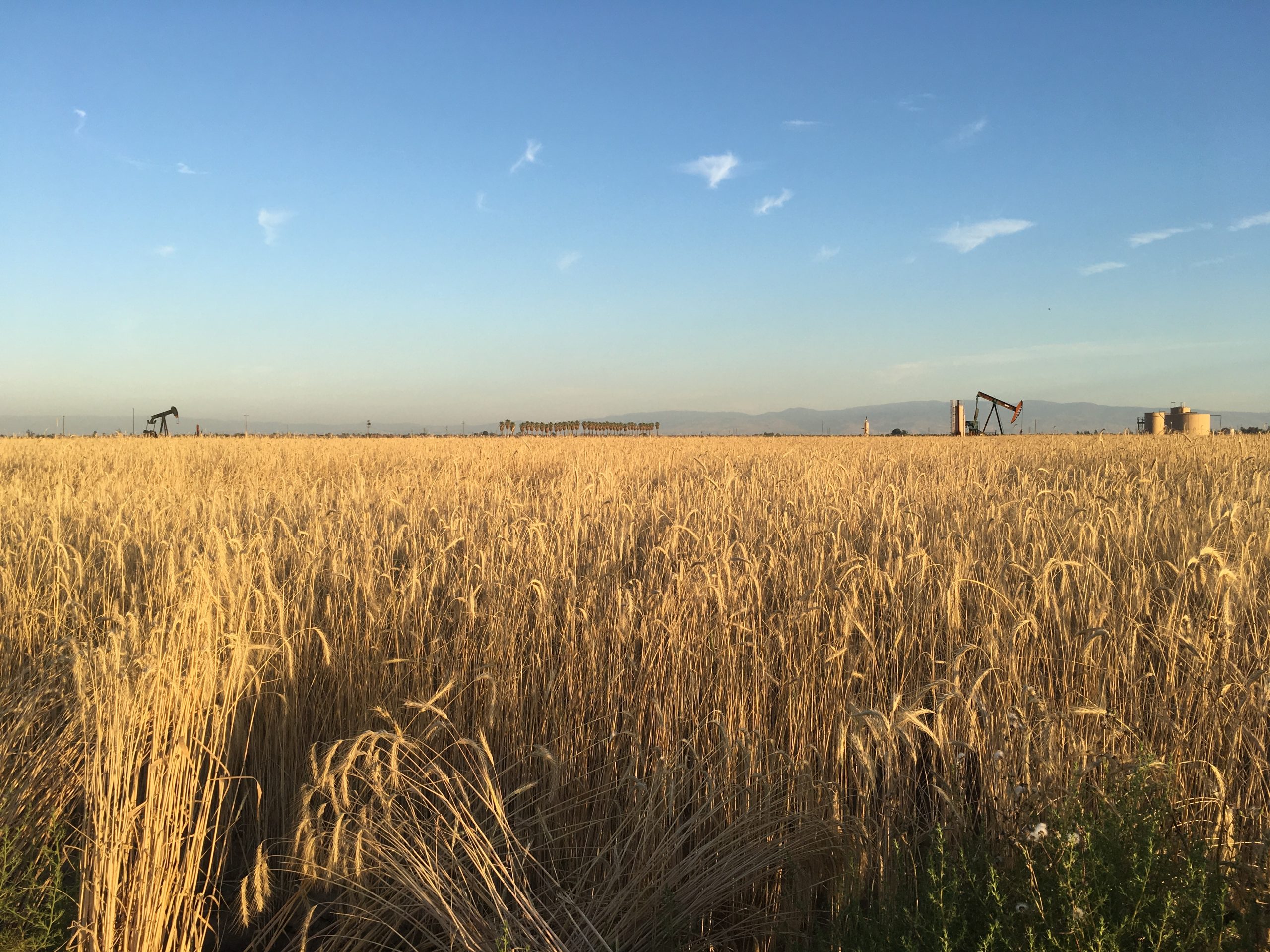
In 2019, I was working a job I didn’t like very much. But it took me up and down the San Joaquin Valley and I snapped a lot of photos of the beauty I found, like this golden field under a blue sky in Kern County.
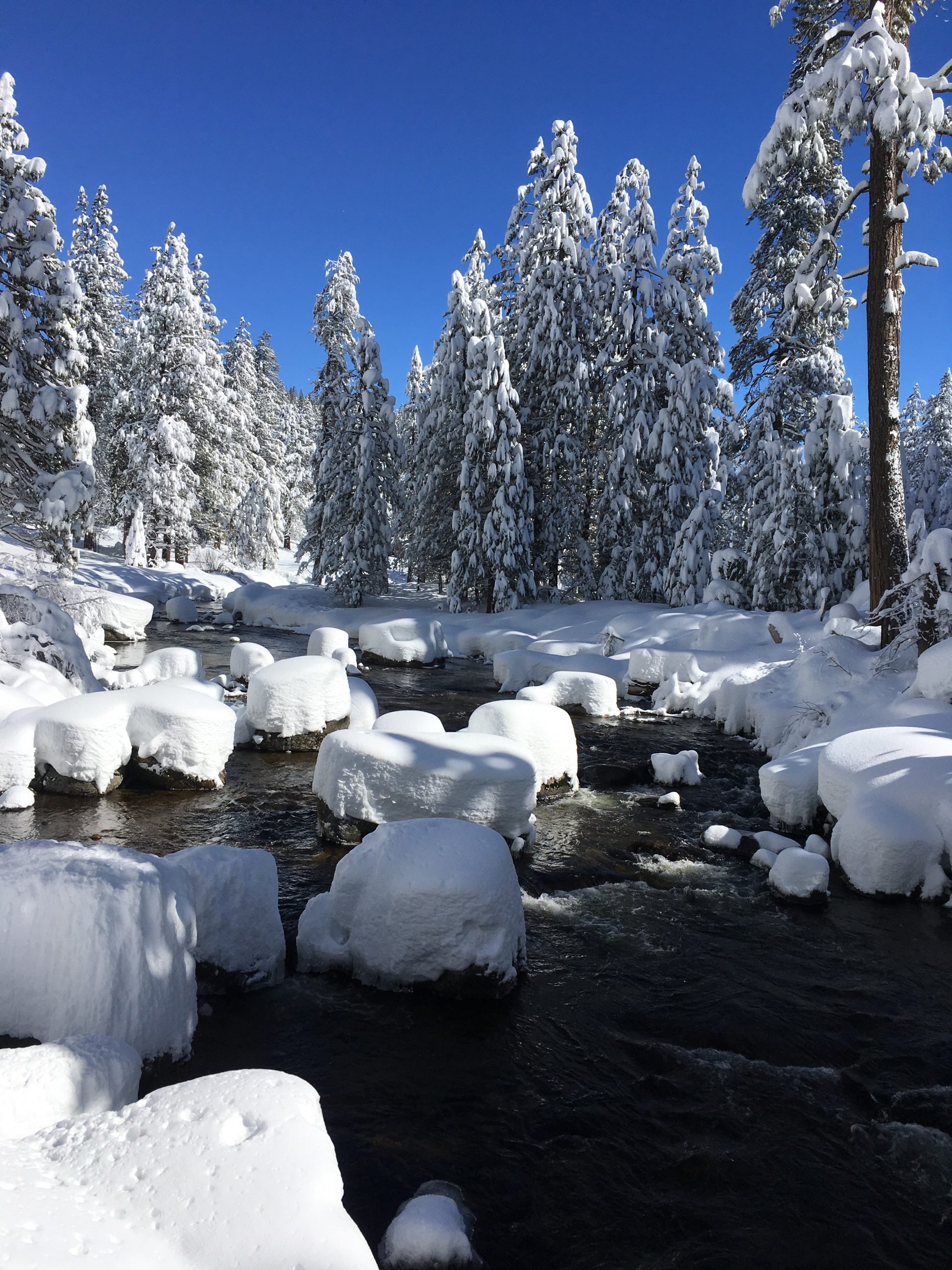
This is the South Fork of the Stanislaus River in February 2019, a pretty good year.
Some families have given up and left their homes.
Others are sticking it out, buying jugs of water by the crate load to wash dishes, shower and keep the toilet working.
“When this first happened, I wanted to leave,” Ana Lopez said in describing what her family’s life has been like since the well in their western Rosedale neighborhood went dry right around Christmas.
They were like everyone else. They turned on the tap and water came out. When it stopped, they had no idea why and no idea what to do.
“I was very…it’s hard to describe what it was like at first. I didn’t know what to do. I got sick and had to go to the ER. I thought I was having a heart attack but it was the stress.”
She and her husband, Paul, have slowly found ways to work around the situation. But Ana said she’s still overwhelmed at times as she tries to give her four young children, ages 11, 9, 6 and 4, as normal a life as possible without running water.
“My husband said we can’t quit, we can’t give up,” she said. “I know it’s like everything else, it’ll take a while, but it will get fixed. It’s just hard because of the kids.”
Theirs isn’t an isolated experience.
More than a dozen wells in Rosedale, mostly around Stockdale Highway and Renfro Road, have dried up or had to be drilled deeper in recent months as the water table has plummeted over the last two years, according to Eric Averett, general manager of Rosedale Rio-Bravo Water Storage District.
Drought and regulatory restrictions on state water from the Sacramento-San Joaquin Delta have certainly played a role, he said.
But the real culprits are the Kern Water Bank and Pioneer Project groundwater banks, which have pulled out so much water so fast that they have changed how water moves under the sprawling district west of Bakersfield, he said.
Historically, water has mounded beneath the Kern River channel and spread out, filling the aquifer beneath Rosedale.
But the massive pull from the groundwater banks, which cover thousands of acres along the edges of the river west of Allen Road, has created a trough beneath the river bed so that Rosedale’s groundwater is now being drained away toward those pumps.
Rosedale has filed lawsuits against both groundwater banks over the issue.
There is no evidence, so far, that the banks are causing the problem, said Jim Beck, general manager of the Kern County Water Agency, which owns the Pioneer Project and is a partner in the Kern Water Bank Authority.
He maintains that the banks have brought a net water benefit to the area, raising groundwater levels above what they would have been without the projects.
“We’ve recovered (pumped out) a significant amount. But we have over 2 million acre feet still in storage,” Beck said. “We stand prepared to address any impacts identified with our project operations. As yet, we have no information from Rosedale about specific impacts.”
Averett said Rosedale isn’t accusing the projects of pumping more water out of the aquifer than they’ve put in. Their concern is that since 2007, the projects have moved a vast amount of water out of the aquifer too quickly.
Between 1981 and 2006, 94,000 acre feet were pumped out of Pioneer and a smaller project called Berrenda Mesa. Between 2007 and 2009, 290,000 acre feet were pumped out of those projects, according to Agency figures obtained by Rosedale, Averett said.
In that same time, district demand has remained flat and Rosedale has brought in more recharge water than it has in its history, Averett said.
Rosedale tried for several years to work with the Agency and Kern Water Bank authorities to get them to reduce pumping, but they refused, he said.
Beck disputes the Agency has been unresponsive.
He noted that when Rosedale made them aware that the Agency had drilled a well too close to other existing wells, they quickly moved the site.
“That’s a great example of how we have addressed concerns,” Beck said.
He added that members of the Kern Fan Monitoring Committee, made up of the various groundwater banking entities, had already begun a study to examine the banks’ impacts on neighboring groundwater levels before Rosedale filed its lawsuits.
“Unfortunately, we’ve not made much progress, what with the litigation,” he said.
The study was far too little, far too late, Averett said.
Besides, studying the project’s impacts should have been done as part of the ongoing operation and never was, he said.
Wells are going dry and landowners need solutions now, not two or three years from now when the study might be completed, he added.
There is some hope that Mother Nature will help out this year with higher-than-average runoff in the Kern River and less need for water from the banking projects as the State Water Project has promised to deliver at least 50 percent of its contracted water to districts throughout the state.
The Kern Water Bank actually did stop pumping at the end of May. Pumping isn’t expected to resume until September, according to Kern Water Bank Manager Jonathan Parker.
Pioneer is still pumping but Beck speculated that his members may also need less stored water because of the bump in state water.
Meanwhile, families like the Lopezes are reluctantly learning more than they ever wanted about how water works in Kern County.
“I know we’ve had a drought but I assumed we had plenty of rain this year,” Paul Lopez said. Even so, his house is now surrounded by dead trees and dirt-brown grass. Ana had tried to keep the trees alive with jugs of water but eventually had to give up. “There’s a canal that runs behind our house and for the last two months it’s been gushing water through there. I don’t know if that has anything to do with our well or not.”
He and his neighbors, most of whom have left their houses, all figured the problem was just with their well.
They were told by one company it would cost thousands per household to drill the well deep enough to reach the water table. But there was no guarantee that in a few months, the water wouldn’t drop even farther.
“I had no idea what was going on until after the fact. This is all new to me.”
Vaughn Water Company is another option. But it’s expensive. Just getting a waterline to the street costs about $10,000 per household. Then there’s an additional cost for each house hook into the line.
Even so, that’s the direction the Lopezes are headed, saving a little at a time.
“It’s hard because we’re trying to pay for the house and everything,” he said. “I don’t want to be another statistic walking away from my house.
“You have to fight for what you have. Some fights are harder than others, but you have to keep going.”
Here’s what I wrote about them back in 2015.
FIRST APPEARED IN THE BAKERSFIELD CALIFORNIAN ON APRIL 19, 2015
Almonds take too much water. Wait, alfalfa is the bad guy. What about those water hogging geeks in Silicon Valley? No, no, no — that “evil” fracking is to blame.
If it’s a day that ends in “y,” Californians are finding new water guzzling bogeymen to vilify. Meanwhile, economists are quietly shaking their heads. All this shaming and finger pointing is beside the point.
It’s all about water markets, they say.
Under truly free and open markets, prices reflect how people value water, which depends on how it will be used.
For instance, farmers will pay a lot for water to keep high value crops alive. They’ll pay less if they have access to groundwater. If they have land to fallow, it may make more economic sense for them to sell water if they own it. In all those scenarios, an open market means water goes to its highest use based on value.
“Blaming ag doesn’t make sense,” said water economist David Zetland, an assistant economics professor at Leiden University College in the Netherlands whose blog “aquanomics” explores water markets in depth.
“The state needs to set a limit on how much water is available and then allow trade. We do the same with oil markets, land markets and other commodity markets. Farmers know how to do markets in their sleep.”
That includes a cap on groundwater use, he added.
No need to tell farmers what to grow or demand city dwellers cut shower times. Scarce water equals higher prices, which means people cut back. Simple.
Water rights holders currently have the ability to sell, trade, transfer and exchange water. It’s not nearly on the scale it needs to be, economists say. And California needs to do a lot more water accounting before it can get there.
But it can be done.
And it has.
The Aussie way
Look at Australia, proponents say. Years ago, amidst a 10-year drought, it set a cap on how much water was available, cut a portion off the top for the environment, then reallocated existing water rights (giving historic rights “higher security”) and let the market roll. No one died. Not even farming. In fact, agriculture is flourishing and cities, which don’t participate in the market, are managing demand at the same time ecosystems are rebounding.
When it’s wet, all water allocations get 100 percent of their share. When it’s dry all shares are cut back with higher security shares cut less.
Prices are more predictable and hoarding less attractive.
“Markets ration the current supply and encourage investment,” agreed Vernon Crowder, senior analyst for the food and agribusinesss research advisory group at Rabobank. “When ownership is uncertain, you have waste.”
And, actually, California’s crazy patchwork quilt of water rights creates more uncertainty than it resolves.
Some rights are based on the fact that a dude stuck a sign next to a river claiming water 150 years ago. Others were born when someone took water from a river and no one complained. Still other rights are codified in contracts with the state and federal governments. Some are “junior,” some are “senior.” On and on. Then there’s groundwater.
Each right, by the way, has a different price tag that often has no relation to what the water is actually worth. Some farmers pay as little as $20 per acre foot, others $250 and up. Most of that is the cost of conveying the water, not for the actual water itself.
When things get dry, that tangle of ill defined, unclear, overlapping rights come out of the woodwork.
Who gets how much? Who has priority? Who should be cut first?
The state has never done a thorough accounting of our ground and surface water to answer those questions, but that may be changing.
A few years ago, the state began requiring basins to monitor groundwater levels. New groundwater laws are forcing users to account for how much they take out and put back every year with the ultimate goal of keeping groundwater in balance.
And the state hasn’t been shy about getting into people’s pre-1914 (the dude with the claim 150 years ago) surface water rights recently, cutting back a number of senior rights last year and again this year.
Gov. Jerry Brown said on Thursday that changes to California’s water rights system are coming, though the changes will be “less transformative” than some would like.
Hands off my rights
Any talk of tinkering with rights causes concern among those who have them, even though they acknowledge water markets have a lot of upsides.
Eric Averett, general manager of Rosedale Rio-Bravo Water Storage District, has studied up on the Australian model and finds it fascinating.
“The drawback is, for everyone who thinks they’re in a secure position with their rights, a market does away with that, and it’s a big risk,” Averett said.
Water economist Zetland understood that fear but said it’s misplaced.
Putting water into an auction-style market helps determine its value. An owner can sell water rights for good, sell just a year’s supply of water or use it to grow crops or houses or golf courses based on that value. Either way, the right is protected, said Zetland.
When I asked if a market would create hoarding, price gouging or cutting out small farmers and the poor, Zetland pointed out that the current situation in California has people hoarding, price gouging and small farmers and several poor communities are without water already, or soon will be.
“Markets give you more options. They do not make your life worse.”
That’s not to say an open water market would magically give everyone everything they want.
We would still only have so much water.
The state would have to quantify and cap how much water is available for trade. Which means there would be winners and losers.
Poor, rural towns, for instance, might be severely restricted in their ability to grow. (If groundwater were in balance, though, they would likely not go dry, as they are now.) Farmers without rights to sell or money to buy water could be out of business.
“You have to manage the resource within your supply,” Zetland said.
Politicians who paint a rosier picture aren’t telling the whole truth. Building new dams or relaxing pumping restrictions in the Sacramento-San Joaquin Delta is just taking water from someone else, which creates its own problems. And without a market to naturally limit demand, “You’re just going to have a shortage again,” Zetland said.
Well, we’ve certainly been down the shortage road enough times. Perhaps it’s time to look for a new path.
Opinions expressed in this column are those of Lois Henry. Her column runs Wednesdays and Sundays. Comment at http://www.bakersfield.com, call her at 395-7373 or email lhenry@bakersfield.com